Notice: Function _load_textdomain_just_in_time was called incorrectly. Translation loading for the sina-ext domain was triggered too early. This is usually an indicator for some code in the plugin or theme running too early. Translations should be loaded at the init action or later. Please see Debugging in WordPress for more information. (This message was added in version 6.7.0.) in /home/lendaltz4bxyqd/public_html/wpt.lendaltower.com/wp-includes/functions.php on line 6131

Notice: Function _load_textdomain_just_in_time was called incorrectly. Translation loading for the sina-ext-pro domain was triggered too early. This is usually an indicator for some code in the plugin or theme running too early. Translations should be loaded at the init action or later. Please see Debugging in WordPress for more information. (This message was added in version 6.7.0.) in /home/lendaltz4bxyqd/public_html/wpt.lendaltower.com/wp-includes/functions.php on line 6131

Notice: Function _load_textdomain_just_in_time was called incorrectly. Translation loading for the unlimited-elements-for-elementor domain was triggered too early. This is usually an indicator for some code in the plugin or theme running too early. Translations should be loaded at the init action or later. Please see Debugging in WordPress for more information. (This message was added in version 6.7.0.) in /home/lendaltz4bxyqd/public_html/wpt.lendaltower.com/wp-includes/functions.php on line 6131

Notice: Function _load_textdomain_just_in_time was called incorrectly. Translation loading for the insert-headers-and-footers domain was triggered too early. This is usually an indicator for some code in the plugin or theme running too early. Translations should be loaded at the init action or later. Please see Debugging in WordPress for more information. (This message was added in version 6.7.0.) in /home/lendaltz4bxyqd/public_html/wpt.lendaltower.com/wp-includes/functions.php on line 6131

Notice: Function _load_textdomain_just_in_time was called incorrectly. Translation loading for the loginizer domain was triggered too early. This is usually an indicator for some code in the plugin or theme running too early. Translations should be loaded at the init action or later. Please see Debugging in WordPress for more information. (This message was added in version 6.7.0.) in /home/lendaltz4bxyqd/public_html/wpt.lendaltower.com/wp-includes/functions.php on line 6131

Notice: Function _load_textdomain_just_in_time was called incorrectly. Translation loading for the premium-addons-for-elementor domain was triggered too early. This is usually an indicator for some code in the plugin or theme running too early. Translations should be loaded at the init action or later. Please see Debugging in WordPress for more information. (This message was added in version 6.7.0.) in /home/lendaltz4bxyqd/public_html/wpt.lendaltower.com/wp-includes/functions.php on line 6131

Notice: Function _load_textdomain_just_in_time was called incorrectly. Translation loading for the wordpress-seo domain was triggered too early. This is usually an indicator for some code in the plugin or theme running too early. Translations should be loaded at the init action or later. Please see Debugging in WordPress for more information. (This message was added in version 6.7.0.) in /home/lendaltz4bxyqd/public_html/wpt.lendaltower.com/wp-includes/functions.php on line 6131

Warning: Cannot modify header information - headers already sent by (output started at /home/lendaltz4bxyqd/public_html/wpt.lendaltower.com/wp-includes/functions.php:6131) in /home/lendaltz4bxyqd/public_html/wpt.lendaltower.com/wp-includes/feed-rss2.php on line 8
Lendal Tower Unique Medieval Tower Accommodation. Take A Virtual Tour! Ancient Schedule Monument. Tower Rental. Attractions: National Railway Museum, Jorvik Viking Centre. Mon, 12 Aug 2024 22:34:59 +0000 en-US hourly 1 https://wordpress.org/?v=6.9.4 https://wpt.lendaltower.com/wp-content/uploads/2022/06/lendal_testimonial.png Lendal Tower 32 32 A city of a million stories: explore York’s rich history https://wpt.lendaltower.com/2024/08/12/explore-yorks-history/ Mon, 12 Aug 2024 22:01:41 +0000 https://lendaltower.com/?p=3074

York is a city like no other, where every cobble, every beam and every crooked building tells a story. A walk around the town’s historic landmarks offers glimpses into the rich and fascinating stories of York’s past. Here’s a flavour of the stories you might discover on your visit to York.

The revolting archbishop

Nobody’s quite sure what drove Richard Scrope, Archbishop of York, to join the Earl of Northumberland’s rebellion against Henry IV.

But revolt he did, openly preaching against the usurper King in York Minster. By May 1405, he’d whipped the York folks into open rebellion, and soon found himself at the head of an 8,000-strong army at Shipton Moor. However, battle never commenced. Some say Scrope was tricked, others say he surrendered. Either way, he was captured by the Earl of Westmorland and taken to Pontefract Castle to await trial. The King soon arrived, and Richard Scrope, the revolting Archbishop of York, soon found himself short of a head.

He was at least allowed to be buried at the Minster, though his tomb was covered up initially. It had become a shrine of sorts, a symbol of the North’s resistance against the throne’s injustices. It’s still there today, in an area sometimes known as Scrope’s Chapel, right below the famous East Window, the largest single glass installation in the UK. It’s just one example of the thousands of fascinating stories found in the Minster’s past. Make sure you leave enough time to explore this breathtaking building

A macabre moniker

One of York’s most notable landmarks actually got its name after a rather unsavoury event in 1322 involving a chap from another North Yorkshire town. Roger, the young and recently assumed Lord of Skipton Castle, found himself in league with Thomas of Lancaster and other noble lords of the North. 

They were angry with Edward II’s rule and rebellion soon ensued. Roger, still just 22 years old, led the rebel army at the Battle of Boroughbridge. Inexperience showed, and an ill-advised cavalry charge saw him gravely wounded. 

Roger was brought to the motte-and-bailey castle at York, and despite his wounds, found no mercy from Edward II. He was executed and left hanging from the castle’s walls for all to see. So went Roger de Clifford, 2nd Lord of Skipton. The castle where he died has been known as Clifford’s Tower ever since.

You can explore the tower, now managed by English Heritage, and discover more of the gripping and grisly events that took place there over the years. The views from the top are magnificent, and you can get around it all in under an hour – leaving you plenty of time to unearth more of York’s past. 

700 years of wheeling and dealing

If you wanted to climb York’s social ladder in the 14th century, cloth was the way to go. The mercers of York imported fine cloths and exported locally produced wool. York Minster was a major customer, and the mercers did very well for themselves, using their superior incomes to grow their social standing.

One such mercer, John de Gisburn, took his social climbing particularly seriously. His ambitious scheming saw him serve three terms as Lord Mayor, and marry off his daughters to the wealthiest suitors he could find. His ambition ruffled more than a few feathers among the local merchants, but he was able to get along with the city’s other prominent mercers long enough to establish the York Mercers’ Guild. 

Remarkably, the building still stands. It’s one of the oldest timber-framed buildings in the UK. What’s more, it’s exceptionally well preserved and still serves its original purpose. It’s now the guild hall for the Company of Merchant Adventurers, which the York Mercer’s Guild became after being given a royal charter in 1581 by Elizabeth I.

The Merchant Adventurer’s Hall is full of stories and artefacts from almost 700 years of York’s entrepreneurs. It has a great little cafe and offers a surprisingly peaceful escape from the bustling streets. Enjoy some downtime and explore the history of the people who made York the commercial hub it is today.

An unknown monster

In the year 1800, three women stood in a nondescript field on the south coast of England. One of them was holding an 18-month old girl. A storm brewed, and the group was struck by lightning. The three women died. The baby survived. Her parents would always say this was why she was so different to everyone else. Before the lightning strike, she was lethargic and sickly. Afterwards, she was lively and intelligent. In fact, she would go on to change the world.

The girl’s father was a cabinet maker. Not a very successful one, apparently. The family was destitute. However, he did have a side hustle of sorts, collecting and selling strange rocks found on the rocky beach near their home. The young girl and her brother became his apprentices. Sadly, the father died in 1810, leaving the family on the brink. But the girl and her brother soon unearthed something that would change their lives. It was a skull. The four-foot-long skull of a monster. Over the next two years, they found the rest of the body. The body of what? Nobody knew.

Nobody knew until later that she had discovered a marine reptile that lived 200 million years ago. Nobody knew how profoundly her discoveries would impact science and religious belief. Nobody knew that 200 years later, the world would celebrate her.

But celebrate her we do. She was of course, Mary Anning, the mother of palaeontology. And you can discover her story, along with an array of breathtaking fossils, at the Yorkshire Museum, just a stone’s throw away from Lendal Tower across the Museum Gardens.

The space race of the 1930s

Just like the US and Soviets’ battle to break beyond our atmosphere, the steam locomotive wars of the 1920s and 30s spawned rapid and profound technological advances as well as fierce competition

Steam locomotives were the ultimate marker of industrial strength, central to the movement of goods and people, symbols of engineering prowess. Britain, the US and Germany all had designs on building the biggest, fastest and most beautiful trains.

The decision to drive a train faster than ever before seems almost to have been a spur-of-the-moment decision. The designer, Sir Nigel Gresley, Chief Engineer at LNER, designer of the legendary ‘Flying Scotsman’, wasn’t driven so much by noble ideals. Rather, he simply wanted to beat the English steam record of 114mph set by rival company, LMS. Perhaps he never actually intended for the driver, John Duddington, to thrash the train so hard that it would beat the world record of 124.5mph set by a German train two years before. 

But beat it they did. And you can see the marvel of engineering that did it (known, of course, as the Mallard), up close, as it sits gleaming alongside dozens more famous engines in the National Railway Museum. A fantastic (and free) way to while away a few hours. 

Honourable mentions

Jorvik Viking Centre – immerse yourself in one of the most iconic eras of British history, in the capital of Viking England.

York Castle Museum – Walk the streets of England as they were 400 years ago, an experience a dynamic range of contemporary exhibits.

The Shambles – take a stroll along the best-preserved medieval street in Europe, calling in at all manner of weird and wonderful shops on your way.


York is a city of a million stories. So many grand old buildings, each living and breathing with the stories of their past. We’ve barely scratched the surface here. To truly appreciate York’s uniquely astounding history, you’ve got to experience it for yourself. While you’re at it, you might as well stay in a piece of York’s past. Lendal Tower has a colourful history as part of York’s fabric, and there’s no better place from which to explore this city of wonders.


Hit the button below to check our availability and book your trip back in time.

 
]]>
Summer in York at Lendal Tower https://wpt.lendaltower.com/2024/05/30/summer-york/ Thu, 30 May 2024 21:34:11 +0000 https://lendaltower.com/?p=3054

On a summer’s day at Lendal Tower, sometimes all you need to do is head up to the roof terrace with an ice-cold drink or two and take in the views. But we’re sure you’ll want to head out and soak up the sun during your stay, and there’s plenty of magical things to enjoy this summer in York.

Festivals 

Visitors in early June have ample opportunity for mind expansion as York Festival of Ideas returns. It’s one of the UK’s largest festivals of its kind and features over 200 events designed to educate, entertain and inspire. Leading experts present talks on all manner of topics – from tech to the Tudors and Shakespeare to sharks, there really is something for everyone. You can also enjoy concerts from globally acclaimed violinists, pianists, guitarists and more, as well as a new musical production of Michael Morpurgo’s War Horse, presented by the man himself. There are also several events looking back at the D-Day landings, with the 80th anniversary on 6th June.

Following the great success of its inaugural year in 2023, York Georgian Festival returns in early August. Organised by York Mansion House, this year features star celebrated author Terry Deary, as he shares his new book, A History of Britain in Ten Enemies. There’ll also be a Bridgerton-themed candlelit cruise, guided tours of the city, and the first York Georgian Ball. Guests will be invited to don their finery and make way to the ‘Great Assembly Hall’. There, you’ll enjoy music from Eboracum Baroque, a two-course meal, and perhaps even a spot of dancing – a dance mistress is on hand to teach a few choice moves.

A summer of classical music

From mid to late July, the award-winning Ryedale Festival attracts classical musicians from around the world. Performances take place in charming locations around the rural area to the northeast of York. Venues include the iconic Castle Howard and Duncombe Park, as well as churches and arts centres in Helmsley, Malton, Pickering, and many more of Ryedale’s picturesque towns and villages.

A special season at York Minster

York’s famous Minster, one of the finest Gothic cathedrals in the world, has stood watch over the city for centuries. And as much as we love the view from Lendal Tower’s rooftop terrace, we have to admit that the view from the Minster’s Central Tower tops it. Climbs to the top can be booked on the day subject to weather permitting, and the view from the top on a clear summer’s day is truly unforgettable.

2024 is also a significant year for the Minster, marking the 40th anniversary of the fire that ripped through the South Transept following a lightning strike. Throughout summer, the regular daily tours include a fascinating retelling of that fateful day in the Minster’s recent history.

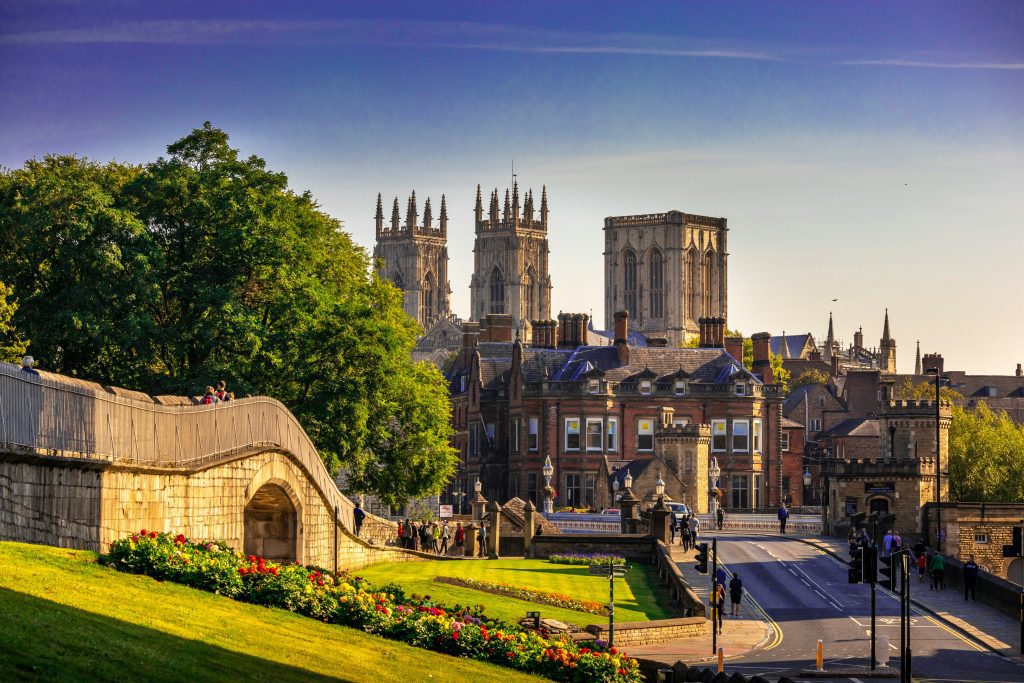
A sunlit area of a town with grass and flowers, a street and some buildings, with a cathedral looming in the background

A surprising Yorkshire tradition

Winemaking is something you usually associate with the sun-baked Mediterranean or the dusty hills of South America. But you can also find vineyards on the rolling hills of North Yorkshire, with not one but three fantastic vineyards just a short drive from Lendal Tower. Throughout summer, they all offer excellent tours and tastings, offering wine-lovers the chance to sample unique wines from some of the UK’s most northerly vineyards. 

Yorkshire Heart offers tours of their beautiful vineyard with options for a light lunch or afternoon tea.

Dunesford Vineyard offers a wine tour with a bit of history, as it is situated near Aldborough, one of the largest urban centres in the north or Roman Britain. It’s believed that wine has been pressed in the area since the Romans ruled here.

Rydale Vineyards offers a relaxed and fun-filled tour led by Jack, the owners’ son and Winery Manager, who was voted Wine Personality of the Year 2022. You can also sample cider from their small orchard, and a selection of local cheeses.

A day at the races

York’s iconic Knavesmire is one of the country’s premier racecourses, and it hosts several prestigious events throughout the summer. The John Smith’s Cup in July is one of Britain’s top middle-distance handicap races, and the atmosphere is always lively. In August, the Ebor Festival showcases the best riders and runners in the world, with tens of thousands of race fans dressed to the nines and cheering on their winners. The Juddmonte International, widely ranked as one of the world’s top races, is a highlight.

Al fresco dining…

It just so happens that possibly York’s best restaurant for outdoor dining is next door to Lendal Tower. Star Inn the City is an award-winning brasserie nestled in the corner of the Museum Gardens. In the warmer months, you can sit out on the gorgeous terrace overlooking the River Ouse and savour some wonderful food and drink in the evening sun.

And much more…

We’ve barely scratched the surface when it comes to all York has to offer. It’s a hive of activity all year round, and in addition to the summer highlights we’ve picked out here, you’ll find endless evergreen activities in and around the city, from globally renowned historic landmarks to unparalleled shopping and dining experiences. 

Check the Tower’s summer availability here (and don’t forget, if we’re fully booked, take a look at our sister properties).

]]>
Discover York in 2024 https://wpt.lendaltower.com/2024/04/03/discover-york-2024/ Wed, 03 Apr 2024 20:42:14 +0000 https://lendaltower.com/?p=3033

York is a city of contradiction. At first glance, its medieval charm and rural surroundings might suggest a somewhat sleepy pace of life. But while there’s certainly relaxation to be had, beneath the quaint exterior it’s buzzing with activity. You’ll find plenty of world-class and unique experiences, from unparalleled culinary delights to fascinating history and some of the finest cultural offerings in the world. 

It’s the perfect blend of the old and new, and there’s simply nowhere else like it. But you don’t have to take our word for it – not only did Conde Nast Traveller recently name York the best place to visit in the UK, but it also named Yorkshire the third-best place to visit in the world in 2024. And you won’t find a more unique place to stay in York than Lendal Tower.

A crucial hub in Britain’s rail network, York is a two-hour train ride from just about anywhere in the UK. So before you search for flights to exotic destinations for your holiday this year, have a look at what this gem of a city has to offer. Here’s what’s coming up in York in 2024.

Culture in York

York’s connection to the arts goes back millennia. But despite the city’s ancient roots, it also plays host to the avant-garde. 

Until the 21st of April, York Art Gallery is home to perhaps the world’s finest collection of contemporary art. The Aesthetica Art Prize exhibition showcases the winners of one of the most prestigious awards in the creative world. The exhibition features artists whose works have won global acclaim and appeared in galleries such as the Guggenheim in New York, the Saatchi in London, and the Centre Pompidou in Paris. 

York’s famous theatres, the Theatre Royal and the Grand Opera House, showcase the best of the performing arts throughout the year. Our pick is An Officer and a Gentleman – The Musical, a captivating retelling of the romantic masterpiece. It graces the stage at the Grand Opera House from the 4th to the 8th of June. 

Candlelight Concerts have become a firm favourite among visitors and locals alike in recent years. Concerts feature tributes to iconic pop artists like Coldplay, Adele, Taylor Swift, and Queen, as well as classical names such as Vivaldi and Hans Zimmer. They promise an enchanting experience, and more will surely be announced later in the year. 

Art lovers seeking a more local flavour will love the York River Art Market. It’s held every Saturday and Sunday from the 3rd to the 18th of August and you couldn’t be better placed to enjoy it. Over 30 artists will set up their stalls along Dame Judy Dench Walk, which runs right in front of the Tower. For a wonderfully relaxing summer afternoon, enjoy a stroll along the riverbank, browsing the artwork before turning into the Museum Gardens or savouring something delicious at Star Inn The City, an award-winning restaurant on the Tower’s doorstep.

If you’re in town in early June, you’ll find plenty going on at York’s Festival of Ideas. This year’s theme is ‘The Power Of…’ , a host of eminent guests provide talks, performances, exhibitions and activities from every field imaginable, from art and archaeology to literature and law. All events are free to attend, and you’re sure to come away with an expanded mind.

History in York: Where Past Meets Present

No trip to York is complete without taking in the Minster. This magnificent building stands guard over the city and draws visitors from all over the world. In addition to the daily services and tours, the Minster has some special exhibitions throughout 2024

Light, Glass & Stone explores the story and conservation of the 600-year-old St Cuthbert Window, one of the finest and most significant examples of medieval glasswork in the world. Also, Treasures: Yorkshire’s People and Parishes showcases a collection of unique and cherished objects that tell the story of Yorkshire life over the centuries. If you’ve a head for heights and the legs and lungs for 275 steps, the views from the top of the Central Tower are simply breathtaking.

The National Railway Museum is one of the UK’s most beloved museums, and it currently has a very special visitor. The Flying Scotsman, perhaps the world’s most famous steam engine, is on static display until the summer. It includes an immersive VR experience that brings its incredible story to life and is sure to delight visitors of all ages. Catch it before it returns to touring heritage railway lines in August. You’ll also get the chance to see other iconic engines such as the Mallard (the fastest-ever steam train) and the Shinkansen ‘Bullet Train’ up close. You don’t need to be a train enthusiast to wonder at the history and innovation behind these marvels of engineering.

The discoveries of Mary Anning reshaped our understanding of the natural world, inspired generations of fossil hunters and helped her blaze a trail for women in science. And from the 14th of July to the 20th of September, a new exhibition at the Yorkshire Museum tells her story, alongside an award-winning fossil display.

Food and Drink in York

York serves up a feast of the finest local fare and global cuisines all year round. But there are certain times when the city becomes even more of a foodie’s paradise.

Chief among those is York Food and Drink Festival, from the 20th to the 29th of September. Simply follow your nose to Parliament Street, where hundreds of market stalls will be tempting you with all manner of culinary delights. You’ll be able to eat your way around the world, one sample at a time. Activities include demonstrations, workshops and taste trails, and entertainment and live music carry on into the evening after the markets close every day.

Countryside around York: Escape the city for a day

While there’s so much to occupy you within York’s famous Roman walls, the surrounding countryside is too splendid not to mention.

The North York Moors are one of Britain’s best-kept secrets. Lesser-known than the Yorkshire Dales or the Lake District, but no less beautiful. The Moors are a haven for walkers, with over 1,400 miles of public pathways including the famous Cleveland Way. 

Our recommendation for a walk would be to drive an hour or so to Helmsley, a picturesque market town on the edge of the Moors. From there, enjoy a stroll taking the English Heritage centres, Helmsley Castle and Rievaulx Abbey, one of the most important monastic sites in the UK.  You’ll find ample refreshment in Helmsley’s several outstanding pubs and eateries.

To experience the grandeur and charm of times gone by, try the Pullman Dining Train on the North York Moors Railway. Glide through the breathtaking landscape in a heritage dining car pulled by a classic steam locomotive, and enjoy a delicious three-course meal or afternoon tea along the way. A unique and unforgettable way to take in some of Britain’s finest countryside.

The thundering of hooves at Knavesmire

York is home to one of the UK’s premier racecourses, which brings hundreds of thousands of race fans to the city every year. The hospitality suites there offer superb views across the raceground, exceptional service and the opportunity to dress up in your finery. August’s Ebor Festival is one of the biggest events on the British racing calendar, while the October Finale is also a must.

What will you discover in York?

York offers an unparalleled blend of the past and present, and is well worth a trip in 2024. Lendal Tower also combines the old and the new. Beneath the ancient grandeur, you’ll find thoroughly modern amenities that ensure unparalleled comfort during your stay in the tower. Check our availability and plan your visit to the treasure trove that is York.

]]>
An Unforgettable Festive Getaway Awaits: Things To Do at Christmas in York https://wpt.lendaltower.com/2023/11/10/things-to-do-in-york-at-christmas/ Fri, 10 Nov 2023 10:02:55 +0000 https://lendaltower.com/?p=2988

As the festive season approaches, it’s time to plan your Christmas getaway in York. There’s simply no better place to immerse yourself in the magic of the holidays than this historic and charming city.

York is renowned for its rich history, stunning architecture, and timeless beauty. When the city dons its festive finery and Christmas spirit flows through the old streets, even Scrooge himself would have to admit it’s quite something.

York at Christmas truly offers something for everyone. Here’s our selection of special experiences that await you.

York Christmas Walking Tours

Begin your holiday adventure with a leisurely Christmas walking tour through the heart of York. The city has played host to winter celebrations for almost 2000 years, from the Romans’ hedonistic capers to Viking Midwinter Festivals.

As you stroll along fairy-lit cobbled streets, you’ll understand how events of the past have helped make York the UK’s most festive city. The tours offer an intimate glimpse into York’s history and its holiday traditions – and perhaps even a cup of mulled wine to warm your cockles on the way around.

Several operators run tours, so shop around to find one that suits your schedule. This popular tour runs every day at 4pm from mid-November to Christmas Eve.

York Christmas Market

York’s famous Christmas Market is where you’ll find all manner of delicacies and unique holiday gifts. Over a hundred charming chalets line the streets, offering an array of treats and trinkets. You’ll find all your Christmas classics like mulled wine, chocolate and knitwear, as well as eclectic delights such as chilli jam and Viking drinking horns.

Whether you’re searching for presents that’ll warm the hearts of your loved ones, or simply want to indulge yourself, York Christmas Market won’t let you down.

Be enchanted by a Christmas concert

For Christmas music like you’ve never experienced before, Alistair Griffin’s Big Christmas Concert promises a soul-stirring evening in a majestic setting. Rejoice in acoustic versions of traditional carols and sing along to Christmas classics from the likes of Slade and The Pogues. The annual event will be held at the stunning Q Church for the first time and runs on the first two weekends of December. It’s guaranteed to sell out, so early booking is recommended.

If you prefer things a little more genteel, the Candlelit Christmas String Quartet concerts offer a more serene but equally enchanting experience. Join them in the beautiful St Olave’s Church on 1st or 2nd December.

You can find out more and book tickets for the concerts here.

York Minster: Choir Music and Candlelit Performances

On the 3rd of December, York’s most famous landmark begins the Christmas season in mesmerising fashion with the Advent procession. A packed roster of festive events follows that. Highlights include carol performances, Tchaikovsky’s The Nutcracker, and Christmas with Jethro Tull.

And of course, the annual Christmas Tree Festival sees the Minster’s interior decked out with over sixty Christmas trees, all fabulously decorated by local businesses, schools and charities. If that doesn’t get you into the festive spirit, nothing will.

Yuletide Elegance at Treasurer's House

In the shadow of York Minster you’ll find the Treasurer’s House – a historic gem at any time of year. At Christmas, however, it’s transformed into a festive wonderland.

Admire the unique decorations, hand-made by volunteers, as you wander through the house. Each room presents new wonders, inspired by the travels of Frank Green, the House’s eccentric former owner, who donated it to the National Trust in 1930.

This eclectic and timeless Christmas experience is open Saturday to Wednesday from 13th November to 17th December 2023.

Cave in to your chocolate craving

Chocolate and Christmas go hand in hand. So it makes perfect sense to indulge your cocoa craving in the UK’s chocolate capital.

As well as being the birthplace of household brands such as Rowntree’s and Terry’s, York also hosts several luxury chocolatiers, such as Monk Bar Chocolatiers, situated on the famous Shambles. And of course, you’ll find all manner of delightful confections in the markets.

But if you truly live for chocolate, then a trip to York Chocolate Story is a must. They pull out all the stops at Christmas time. While it’s a magical experience for kids and families, it also offers a unique adult chocolate-making masterclass, complete with boozy hot chocolate.

Christmas dining

Why limit your indulgence to just chocolate? York is brimming with world-class eateries showcasing the best seasonal produce. You won’t have to go far to find a festive feast.

In fact, one of our recommendations is in the shadow of the Tower itself. Star Inn The City offers casual yet exquisite dining in a beautiful riverside setting.

For those with a fervour for flawless food, York’s only Michelin-starred restaurant is a must. Roots York takes produce from the family farm of renowned chef, Tommy Banks and uses cutting-edge techniques to conjure up culinary wonders. The tasting menu is constantly evolving, which means you’ll get a truly once-in-a-lifetime dining experience.

For something a little different, try Skosh. This eclectic, open-plan restaurant offers small plates of English classics with a twist, often infusing Asian influences.

Several York restaurants are featured in the Michelin guide, so you’re sure to find something that suits your palate.

Roaming

The beauty of York is that one doesn’t need a plan. With so many wonders crammed within the ancient walls, simply roaming the streets is an experience. With hundreds of shops, cafes, restaurants, bars and galleries, all beautifully adorned for Christmas, you’re sure to stumble across countless delights wherever you go.

York truly offers everything you could need for a luxurious and enriching Christmas getaway. And with the Tower’s interior festooned with decorations, you’ll have a beautiful and historic festive refuge for the duration of your stay. A truly unforgettable Christmas experience.

See our availability and book here, or feel free to get in touch with us if you have any enquiries.

]]>
If these walls could talk: the history of Lendal Tower https://wpt.lendaltower.com/2022/03/17/if-these-walls-could-talk-the-history-of-lendal-tower/ Thu, 17 Mar 2022 14:57:27 +0000 https://lendaltower.com/?p=1

York has been there through the thick and thin of British history. The seat of Roman emperors, the landing ground of the Great Viking Army, the capital of the Medieval North. It’s been at the sharp end of civil wars, regicidal conspiracies and industrial revolution.

This rich and varied history is reflected in the city’s architecture. Each building a piece of the mosaic that depicts this place of wonder.

And nestled in the centre of York is Lendal Tower. Like the city itself, the Tower has morphed over the centuries, with bits added, removed and altered according to its changing purpose and the tastes of its owners.

This constant transformation is what gives Lendal Tower its singular character. There’s truly nowhere like it for your weekend getaway in York, and this is its story.

Location

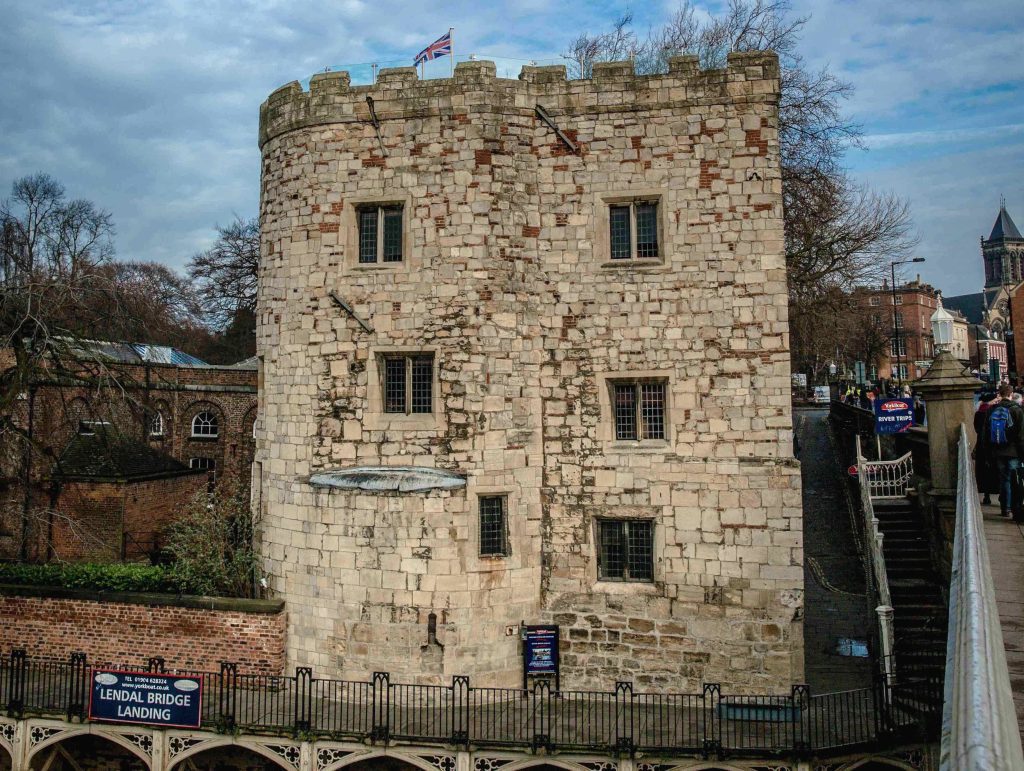
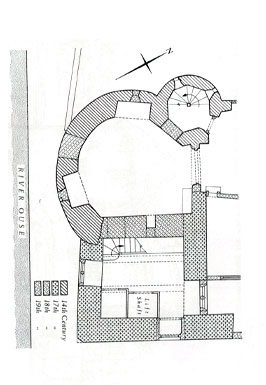
Lendal Tower lies at the western edge of the city centre, perched on the eastern bank of the Ouse as it dips through the city on its southeasterly course. The Tower sits at the southern tip of the York Museum gardens, which were formerly the grounds of the now-ruined St Mary’s Abbey.

From the Tower, you have the entire ancient city within a ten-minute walk. With landmarks such as York Minster, Clifford’s Tower and the York Museum on your doorstep, it’s the perfect spot for a historic city break.

The York City Wall Walk passes right by Lendal Tower, as it runs from the Multangular Tower and crosses Lendal Bridge. The Multangular Tower is just a stone’s throw away. It’s the best-preserved example of Roman architecture in the city and definitely worth a look.

14th Century - Construction

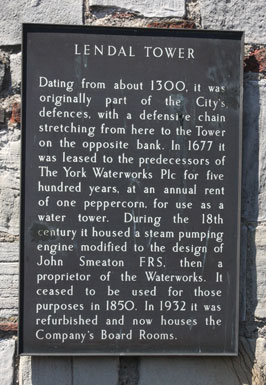
Lendal Tower was first built in 1300 as an addition to the city’s defences. It was first mentioned in the Custody of 1315 as ‘Turrim Sancti Leonardi’ (Tower of St Leonard).

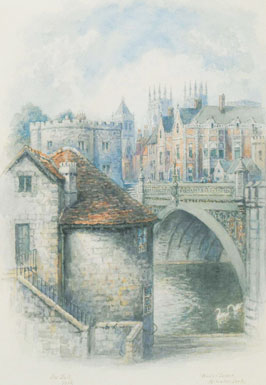
You don’t need to imagine what it would have looked like 700 years ago. You simply need to look across at Barker Tower (also known as North Street Postern Tower), on the opposite bank. Originally, Barker and Lendal Towers were identical, and Barker Tower looks much the same as it did when it was first built all those years ago.

These two little towers not only looked identical – they worked in tandem to perform an important job that helped to ensure the city’s prosperity in Medieval times.

Between these two towers ran a great iron chain, known as a boom. The chain could be raised across the river to prevent ships from passing through without paying their toll. Also, a ferry service ran between the two towers for several centuries, until the construction of Lendal Bridge in 1863.

16th Century - Fortifications

For the first couple of centuries, the Tower got along just fine ensuring the tolls were paid. But in the 16th Century, it found itself in the midst of treason and rebellion…

In 1569, insurrection brewed as the Catholic nobles of the North plotted to depose Elizabeth I, and insert Mary, Queen of Scots in her place – The Rising of The North. Led by the Earls of Northumberland and Westmorland, the rebels occupied Durham, 75 miles to the North, and then marched on York.

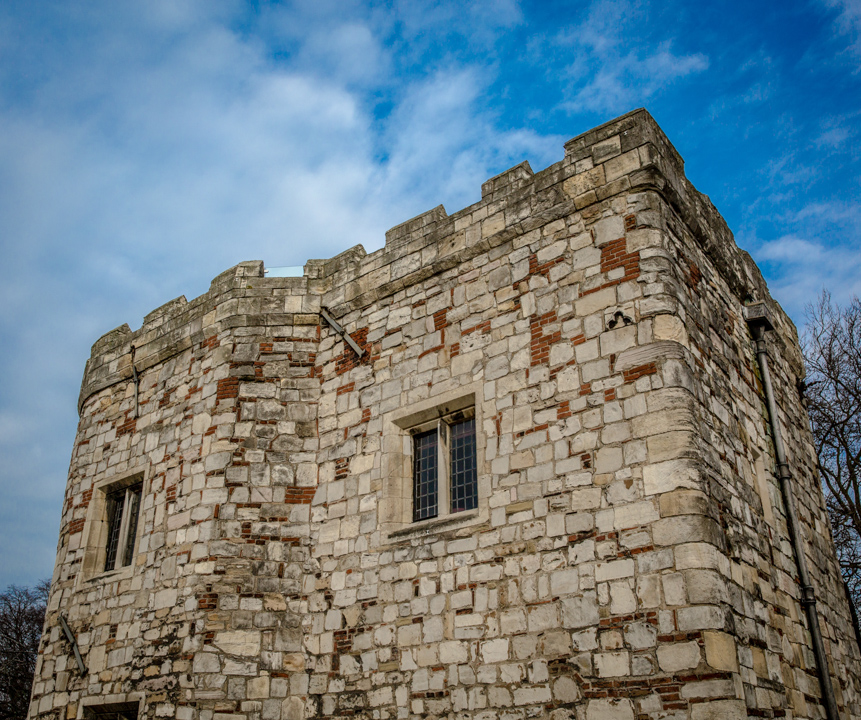
The city’s Lord Lieutenant ordered the construction of bulwarks at both Lendal and Barker Tower, should the rebel Earls attack by the river. You can see some evidence of the Tower’s military design in the embrasures (arrow slits) seen on the ground floor of the living area and as you go up the spiral staircase in the northwestern turret.

However, as it turned out, Lendal Tower wasn’t called into action. The rebels never got as far as York’s city walls. The Earl of Sussex led a superior force of the Queen’s soldiers out from York, to meet Northumberland and Westmorland in the field. Outnumbered, the rebels dispersed and fled north into Scotland, and that was that.

The Earl of Northumberland was eventually captured, dragged back to York, and executed on Pavement, a street about half a mile from Lendal Tower. But it would be another 70 years or so before the Tower saw any major military action.

17th Century - Waterhouse

Several attempts were made during the 16th century to convert the Tower into a water pumping station. Finally, an investor named Mr Maltby attempted to initiate a piped water supply out of the Tower. However, this doesn’t appear to have been a success, as by 1646 the Tower was being used as a warehouse and described as ‘much ruinated’. This ruination could have happened during the Siege of York.

This was a two-month conflict during the English Civil War, where parliamentary forces attempted to take the city from the Royalists.  It’s possible that Lendal Tower sustained damage during a bombardment. This may have resulted in the destruction of the original northern and eastern walls, which would have been rounded like the western and southern sides.

The siege ended in July 1644, when the outnumbered Royalist army surrendered. The Tower then enjoyed thirty years of relative peace before it was leased by Henry Whistler of London, who proposed a new scheme for supplying water. On 1st April 1677, the Tower was leased to him for 500 years at a peppercorn rent, once again to be used as a waterhouse.

He was given permission to make improvements and the Tower was enlarged and strengthened to accommodate a lead cistern. This is when the rectangular part of the Tower, on the eastern side, was built. Much of the Tower’s current facing contains reused stone, possibly from the nearby St Mary’s Abbey, situated just a few hundred metres to the northwest, in what is now the Museum Gardens.

Whistler’s initial attempts to use a windmill and waterwheel to raise water were ineffective, so in 1684 a horse-powered water wheel was installed. This would have been in what is now the living area. By 1685, the water supply from Lendal Tower was in full flow.

18th century - Into the Industrial Age

Following Whistler’s death in 1719, the Tower was sold to Colonel William Thornton, who may have used it as a private residence. He then mortgaged the Tower in 1756, possibly to raise funds for the installation of a Newcomen steam engine, which was installed around this time.

In 1779, John Smeaton, the ‘Father of Civil Engineering’, acquired shares in the Tower and its waterworks. From 1781-84, Smeaton set about rebuilding the engine, upgrading it from 4.7 horsepower to 18 horsepower. Upon the work’s completion, the engine could raise 10,500 gallons per hour, for up to eight hours a day.

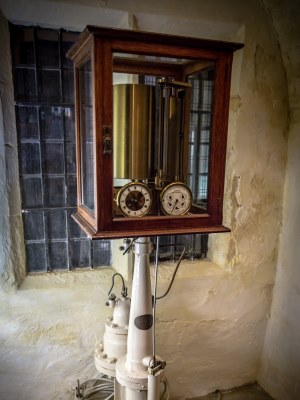
A pressure gauge from one of the water pumps stands proudly in the Tower’s entrance hall, evoking the Tower’s past life as soon as you enter. And if you take a look around the walls of the Tower, you’ll see some of Smeaton’s original preserved drawings of the engine. You’ll also see the corbels, the protruding brickwork that would have been used to support the engine and upper floors.

19th-20th century - The grandest of offices

Lendal Tower underwent its next great transformation midway through the 19th century. Smeaton’s engine continued running in the Tower until 1836, when it was moved to a new engine house. Ten years later, Lendal Tower’s tenure as a waterworks ended completely as a new facility was founded at Acomb.

With the lead water cistern removed, the Tower was lowered by ten feet and it became the headquarters of the newly incorporated York New Waterworks Company. You may also be surprised to learn that one of the Tower’s most distinctive Medieval features – the crenellated parapet now seen atop the Tower – was only added in Victorian times. It was built in 1846, to designs by prominent York architect, George Thomas Andrews.

The officers of the company eventually felt they needed a grander setting in which to carry out their work, and in 1932, the two upper floors were panelled and decorated in Jacobean style. This panelling is still on display in the first and second-floor bedrooms. The uppermost of these is the master bedroom, and this served as the water company’s boardroom. Evidently, they also grew tired of climbing the stairs, as they added the lift at this time (unfortunately, the lift is not available for guest use – visitors to the Tower today must climb the stairs).

Lendal Bridge - 19th century

No account of Lendal Tower’s history is complete without a mention of Lendal Bridge. This iconic river crossing was designed by Thomas Page, who also designed Skeldergate Bridge and London’s Westminster Bridge. Its elegant Gothic Revival ironwork includes a pair of lampposts, coats of arms and even the initials of Victoria and Albert.

Page’s Bridge, completed in 1863, was the second attempt to span the river at this site. The first, in 1860, failed when it collapsed during construction, killing five men. A year after the bridge was completed, the cast iron walkway seen along the southern face of the Tower was built. This walkway is now known as Dame Judi Dench Way, in honour of the esteemed actress who was born and raised in York.

Spare a thought for the ferryman. The bridge spelled the end for the ferry service that had run between Lendal and Barker Towers for centuries. Apparently, he received compensation of 15 pounds and a horse and cart (about £2,500 and a good-sized hatchback today).

Modern Day

Eventually, the water company moved into more modern offices and the Tower fell into a state of disrepair. It was designated a Grade I listed building in 1954 and, as part of the city’s historic defences, is also protected as a scheduled monument.

After first going on sale in 2004, the Tower changed hands a few times. This was perhaps due to developers being daunted by the maze of planning and preservation requirements involved in renovating the property.

Finally, it came into the possession of Ian Berg, the previous owner, who worked hand-in-hand with York Council and English Heritage experts to ensure the renovation honoured the Tower’s venerable status and history.

Specialist craftsmen from around Yorkshire were brought in, including some who had worked on York Minster, and painstaking work began to not only restore the Tower to its past glory, but to give it a secure future as a supremely comfortable residence fit for modern demands.

It’s our pleasure and privilege to maintain this living, breathing monument to York’s past, and to share it with those who wish to immerse themselves in the city’s rich history.

So if you are looking for an historic city break or a weekend getaway in the centre of York, you can check the Tower’s availability using the booking calendar below. Alternatively, feel free to get in touch if you have any queries.

]]>